OUR TRAVELS

Photos of sightseeing enthusiasts

A TRIP ROUTE
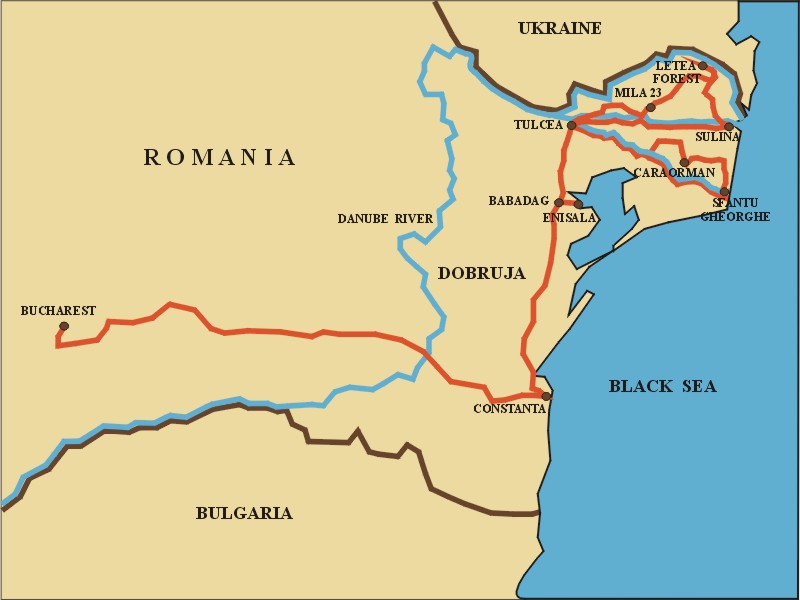
Romania - the route of the trip


INTERESTING STORIES

When German and Soviet forces attacked Poland in September 1939, Romania accepted approximately 100,000 Polish military and civilian refugees. Although the Polish authorities were interned by the Romanians, no Poles were extradited to the Germans, despite intense pressure from Berlin. On September 17th, the Polish authorities, before crossing the Romanian border in Zaleszczyki, released the Kingdom of Romania from its obligation to provide armed assistance in the event of Russian aggression. It was only thanks to the Romanian authorities' stance that the evacuation of 80 tons of Polish gold from the National Bank of Poland was successful. Despite enormous pressure from both Germany and the Soviet Union, the Romanians agreed to the transfer of Polish assets through their territory. After crossing the country, the Polish gold was loaded onto a ship in the Romanian port of Constanța, from where it continued its journey to the West. At the request of the Polish authorities, approximately 4 tons of Polish gold remained in Romania as part of the aid granted to Polish refugees. When Romania defected to the Allies in 1944, government officials hid the national gold and Polish valuables from the Germans. The treasures survived the rest of the war in a Carpathian cave and were returned to Warsaw in 1947. (source: www.chwalazapomniana.pl)

Zaleszczyki road after evacuation of Polish government to Romania in 1939 (www.faktopedia.pl)


IT IS WORTH KNOWING

The sleepy town of Babadag in Romanian Dobruja lent its name to Andrzej Stasiuk's book "Going to Babadag." In his diary, published in 2004, the author recounts his travels through various countries of Central and Eastern Europe, creating a map full of forgotten and seemingly unattractive places for tourists. Hitchhiking, on foot, or by train, he describes the countryside, impoverished villages, and deserted landscapes where time seems to stand still. During his journeys, he delves into the lives of simple people: workers, farmers, and bluebirds. In Romania, he observes the contrast between traditional rituals and the contemporary decay of society. During his travels, the author visits places rife with poverty, such as the titular Romanian Babadag, forgotten villages in Albania, and Hungarian-Slovak Roma settlements. He describes them as spaces where time stands still, and the inhabitants' lives proceed according to tradition. The past blends with the present, and modern elements seem dilapidated and marked by decay. (source: www.poezja.org)

Andrzej Stasiuk - `Going to Babadag`


Romania - Dobruja, Bucharest

July 2025
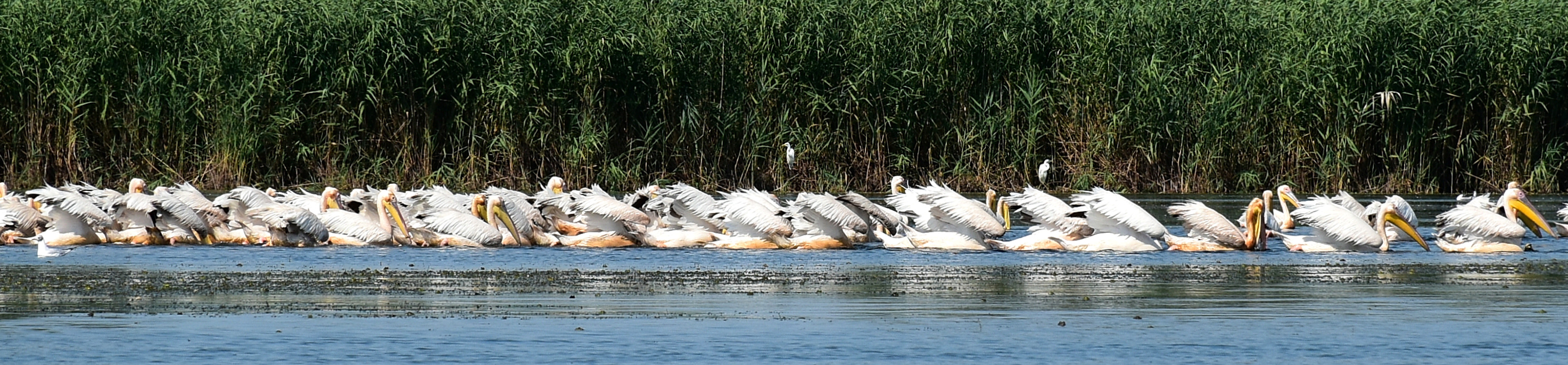
Danube Delta

My previous stay in Romania was very successful, and even then I decided I absolutely had to return. Rumunia is a large country, incredibly diverse in terms of terrain, history, and culture. It delights with impressive mountains, pristine nature, Europe's largest biosphere reserve, and the sandy beaches of the Black Sea.

The idea to visit the Danube Delta arose in unusual circumstances. On my way home from a walk, I noticed a photography exhibition by Romanian artist Florin Andreescu titled "The Danube Delta - The Amazon of Europe" on the fence of the Public Library on Rajska Street. The beautiful, original photographs and descriptions of nature made such a huge impression on me that I decided to go there. I figured that since I hadn't been to the Amazon yet, I would at least see the "Amazon of Europe." The logistics of preparing the trip were quite complicated, but fortunately, everything turned out well.


Tulcea and surroundings


Babadag, meczet Ali Paszy z pocz. XVII w. Sala modlitewna Koran Pomnik Bohaterów Wojen Światowych W drodze Pamiątkowa fotka Enisala, ruiny średniowiecznego zamku Dziedziniec zamkowy Pozostałości wieży bramnej Panorama okolicy z murów obronnych Druga linia umocnień, fundamenty trójkątnej wieży Widok na jezioro Razelm, będące w średniowieczu zatoką Morza Czarnego Tulcza, nabrzeże portowe W oczekiwaniu na prom Prom do Tudor Vladimirescu Oryginalna instalacja artystyczna Muzeum Etnograficzne w budynku w stylu nurtu narodowego Katedra św. hierarchy Mikołaja z Tulczy z XIX w. Wnętrze katedry, ikonostas Błogosławieństwo Oryginalna fontanna Wiosenne Źródła Hospodar wołoski Milcza Stary (1358-1418) Akwarium w Muzeum Delty Dunaju, jesiotr gwiaździsty Dunaj, łodzie rybackie Dunaj, piaszczysty brzeg Impresja

Tulcea turned out to be an excellent base for both the Danube Delta and nearby attractions. Since renting a car for a day proved impossible, I didn't manage to visit the Old Believer villages. However, I did reach the godforsaken town of Babadag, which featured in the title of Andrzej Stasiuk's famous book. I also had the opportunity to admire the ruins of the medieval fortress Enisala, picturesquely situated on a former bay of the Black Sea.


Danube Delta


Witaj przygodo ! Odnoga Tulcza Drzewostan mieszany Kanał Mila 36 Jezioro Baclanestii Mari Pierwszy kontakt z pelikanami Trzcinowiska i grążele Unoszące się na wodzie liście grążeli Zauroczenie Żaki rybackie Łabędź niemy Czapla Pelikany w locie Trzcinowiska Kanał Sontea Lata Osada Mila 23 Rozładunek arbuzów Nabrzeże portowe Tradycyjna chata, sieci rybackie Kanał Eracle Jezioro Matita, kaczki Łabędzie nieme Łabędź niemy Jezioro Matita Poranna toaleta Poranna toaleta Kormorany Grążele jak okiem sięgnąć Rybitwa biała Samica rybitwy odstraszająca intruzów od gniazda Lilia wodna Rybitwy portret własny Pamiątkowa fotka Kanał Suez Samotna osada Jezioro Merhei Kanał Letes Przystań Letea Stepowy krajobraz Dzikie konie Rezerwat Las Letea Dąb szypułkowy Las Letea Las Letea Wydmy Pamiątkowa fotka Stary dom we wsi Letea Ozdobny szczyt dachu Tradycyjna chata kryta trzciną Baranica Kanał Cardon Ujście Dunaju do Morza Czarnego Wrak statku Turgut S Wrak statku Turgut S Latarnia morska Gaz do dechy ! Sulina, nabrzeże portowe Tutaj nikomu się nie spieszy Cerkiew św. Aleksandra i św. Mikołaja Mewy Odnoga Sfantu Gheorghe Czapla biała Jezioro Uzlina Dzikie ptactwo Mewy Mewa srebrzysta Wśród ptactwa wielkie poruszenie Szybujący pelikan Kanał Litcov Caraorman, nabrzeże portowe Wieś Karaorman, znaki jak w Amsterdamie Kaczka dziwaczka Orzech wodny Impresja Czapla modra Wilczomlecz Osioł zwyczajny Stepowy krajobraz Dziewicza przyroda Rezerwat Caraorman Pomnikowy dąb Pamiątkowa fotka Dziewicza przyroda Pomnikowy dąb Wycieczkę trzeba odpracować Swojskie klimaty Kanał Caraorman Jezioro Puiu Łabędzie Jezioro Rosu Rybacy Na posterunku Kanał Cordon Centura Litoral Swojskie klimaty Sfantu Gheorghe, marina Cerkiew św.Jerzego Na posterunku Czas wracać do domu

I have already booked tours around the Danube Delta in Poland. I decided to go on all-day motorboat trips along two branches - Sulina and Sfantu Gheorghe. It was a fantastic adventure. Although the captain liked speed and didn't swim too close to wild birds, I still managed to take some nice photos. An unexpected attraction was the wreck of the Georgian-flagged ship Turgut S, which in 2009 ran aground at the mouth of the Danube into the Black Sea.


Constanta


Bulwar Królowej Elżbiety Secesyjne Cazino Paris Latarnie Spacerowicze Altana Latarnia genueńska Miniaturowa wersja schodów z Odessy Królowa Elżbieta Rumuńska i dziewczyna z harfą Katedra św. Piotra i Pawła z poł. XIX w. Ruiny domów i brukowana ulica z IV-VI w. Wizerunek krzyża Fasada katedry ozdobiona żółto-szarymi pasami Latarnia Wody święconej na pewno nie braknie Podniebienie kopuły, Matka Boska z Chrystusem Emanuelem Duszpasterska posługa Relikwiarz Duszpasterska posługa Muzeum rzeźbiarza Iona Jalea, budynek w stylu neorumuńskim Ion Jalea, Odpoczywający Arkas Dom z lwami w stylu włoskiego neorenesansu Meczet Mahmuda z 1910 r. Muzeum Historii i Archeologii Rzymskie sarkofagi Plac Owidiusza Pamiątkowa fotka Staromiejski deptak Rzymski poeta Owidiusz zadumany nad swoim losem Nieoczekiwany gość Malowniczy zakątek Staromiejski deptak Muzeum Sztuki Ludowej w dawnym ratuszu Wilczyca Kapitolińska przypominająca o rzymskim dziedzictwie Park Archeologiczny Pozostałości murów i bramy miejskiej z czasów rzymskich Statek pomnik Mamaja, stare molo Mamaja, opustoszała plaża we mgle

The founding of the city of Constanța (Greek Tomis) is linked to the myth of the Argonauts. I must admit that I left the place of exile of the Roman poet Ovid somewhat disappointed. The reason wasn't the city itself, but the ubiquitous renovations that prevented me from seeing the most interesting attractions of the capital of Dobruja, the Roman House of Mosaics, home to the world's largest floor mosaic, and the Archaeological Museum.


Bucharest


Bulwar Unii, główna arteria w centrum miasta Pałac Parlamentu z czasów Nicolae Ceausescu Cerkiew Księcia Radu z XVI w. Wędrowny pielgrzym Klasztorna dzwonnica Drewniane biło do zwoływania wiernych na naborzeństwo Podniebienie kopuły, Chrystus Pantokrator Rzeka Dambovita, w głębi Biblioteka Narodowa Cerkiew Księżniczki Balasy z poł. XVIII w. Ceremonia ślubna Wszechobecna reklama Pałac Patriarchy z XVII w. Kościół metropolitarny z XVII w. Ikonostas Relikwiarze Klasztor Antim z pocz. XVIII w. Rzeźbione drzwi Freski zdobiące sklepione przejście na dziedziniec Carskie wrota Cerkiew Księcia Michała z XVI w. Modlitwa Fundatorzy, hospodar Michał Waleczny i Doamna Stanca Rzeka Dambovita Narodowe Muzeum Historii Rumunii w neoklasycystycznym budynku Sarkofag Zofii Potockiej z 1583 r. Replika Kolumny Trajana w sklali 1:1 Płaskorzeźba z Kolumny Trajana, walka Rzymian z Dakami Płaskorzeźba z Kolumny Trajana, śmierć ostatniego króla Daków Decebala Cerkiew Zlatari z XVII w. wśród współczesnej zabudowy Cerkiew Stavropoles z 1724 r. Pridvor, ozdobna kolumna Pamiątkowa fotka Nawa, mauretańskie arkady Zaciszny dziedziniec Pałac Pinakoteki z końca XIX w. Pałac Bursei, dawna siedziba giełdy Starówka, ulica Lipscani Zajazd Manuka, tutaj Rosja i Turcja podpisały traktat pokojowy w 1812 r. Cerkiew Starego Dworu z XVI w. Supraporta Modlitwa Przystępne ceny Portyk cerkwi św. Jerzego Nowego z końca XVII w. Imponujący ikonostas Matka Boska z Chrystusem Emanuelem Nawa Polichromia przedstawiająca Sąd Ostateczny Cerkiew Trzech Hierarchów (Bazylego Wielkiego, Grzegorza Teologa i Jana Chryzostoma) Pomnik Cristiana Paturca, autora `Hymnu chuliganów` Plac Uniwersytecki Michał Waleczny, hospodar Wołoszczyzny Atlant Rosyjska cerkiew św. Mikołaja Modlitwa Aleja Zwycięstwa Czas relaksu Cerkiew Cretulescu na planie koniczyny w stylu Brancoveanu Plac Rewolucji (obalenie reżimu komunistycznego w 1989r.) Biblioteka Uniwersytecka Karol I (1839-1914), król Rumunii Muzeum Sztuki, reprezentacyjna klatka schodowa Łukasz Cranach Starszy, Wenus i Amor (1520) Ateneum Neoklasycystyczny portyk Park Króla Michała I, zegar Łuk Triumfalny Pamiątkowa fotka Pomnik Charles`a de Gauela Pałac Iskry z czasów komunizmu Pamiątkowa fotka Chaty z XVIII w. z regionu Maramures Pamiątkowa fotka Kolorowy nagrobek z Marmarosz Spiżarnia Impresja Chata z 1812 r. z Transylwanii Wnętrze chaty, kuchnia Dom z XIX w. z okolic Tulczy Półziemianki z XIX w. z Oltenii Żarna Dom z XIX w. z okolic Suczawy Żuraw Stempel tłuczkowy do miażdżenia złotonośnej rudy Karuzela z drewnianymi konikami z lat 60-tych XX w.

Bucharest is called the Paris of the East, and there's no exaggeration in that statement. Although Nicolae Seausescu did much damage, the city still boasts numerous Orthodox churches, monasteries, and eclectic and neoclassical buildings. However, I especially enjoyed the open-air museum, which houses nearly three hundred original houses, farm buildings, workshops, churches, and chapels from all over Romania.


Our favorite photos

Bukareszt, cerkiew Księżniczki Balasy

Dobrudża, ruiny twierdzy Enisala

Delta Dunaju, rezerwat Las Letea

Delta Dunaju, Lilia wodna

Delta Dunaju, rybitwa
