OUR TRAVELS

Photos of sightseeing enthusiasts

A TRIP ROUTE
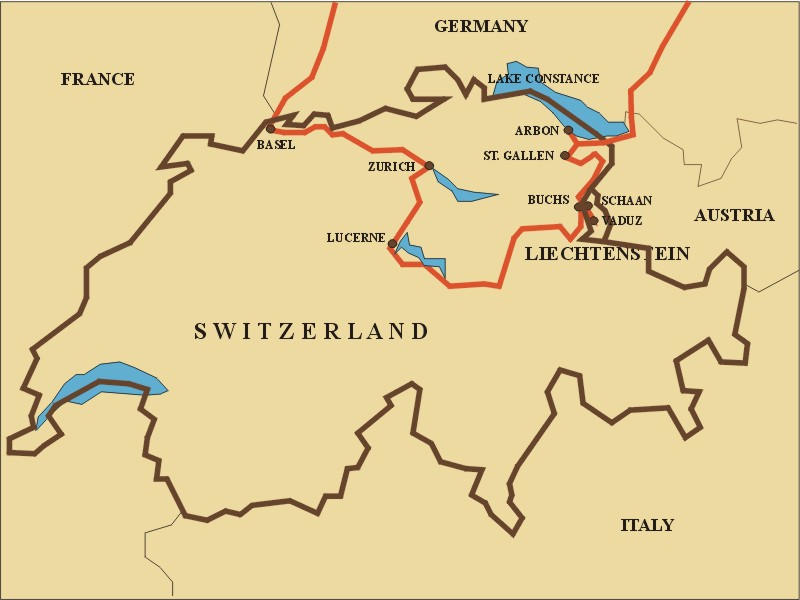
Szwajcaria, Liechtenstein - the route of the trip


INTERESTING STORIES

Contacts between the lands of present-day Poland and Switzerland have a centuries-old tradition. In 1085, a Polish delegation, sent by Duke Władysław Hermann to the Abbey of Saint-Giles in Provence, returned through western Switzerland. A significant revival in trade relations occurred in the last two centuries of the Middle Ages, when merchants from Saint Gallen traded with Kraków and Poznań. A large Polish delegation also attended the Council of Basel (1431–1437). The first Polish emigrants to Switzerland were members of the Bar Confederation, followed by participants in subsequent independence uprisings. One of them was Tadeusz Kościuszko, who spent the last years of his life, between 1815 and 1817, in Solothurn. The Helvetian Confederation was a favorite setting for the greatest Polish Romantic poets. Juliusz Słowacki stayed in Geneva from 1832 to 1835, and Adam Mickiewicz, who lectured in Latin literature at the University of Lausanne, also visited Switzerland in the late 1830s. Zygmunt Krasiński also visited Switzerland, and the mystic Andrzej Towiański was associated with Zurich for many years. However, the greatest financial success and recognition came to Antoni N. Patek (1811–1877), who founded the famous watch factory in Geneva in 1839. (source: www.eks.uwr.edu.pl)

Tadeusz Kościuszko in Solothurn (source: www.muzhp.pl))


IT IS WORTH KNOWING

The 2nd Rifle Division was formed in France at the turn of 1939/40, following Poland's defeat in the September Campaign. Despite being underequipped, it took part in the 1940 French Campaign, where it fought against the superior forces of the Wehrmacht in Alsace. After the end of resistance on June 19th, most of the division's forces crossed the Swiss border and were interned. Eight camp groups were established in Switzerland. Most of the soldiers were assigned to work for the Swiss economy. Initially, they worked on the construction of field fortifications for the army, and later on roads of military importance. They also participated in agricultural work. The internment period lasted five years and was a difficult time for the soldiers, but it also provided opportunities for education and cultural activities, thanks to the support of Swiss society. After the war, despite the re-emigration campaign, only about 2,000 soldiers returned to Poland, while approximately 1,300 remained in Switzerland. Those who remained could continue their studies or choose to emigrate to other countries.

Polish soldiers interned in Switzerland (source: www.przegladdziennikarski.pl)


Switzerland, Liechtenstein

August 2025

Switzerland, Buchs

This trip was probably the craziest of all my trips so far. Due to the unpredictable and constantly changing weather, I wasn't sure which destination I would choose until the last minute. When the weather finally stabilized, I chose Switzerland and Liechtenstein without hesitation.

In this situation, purchasing reasonably priced plane tickets proved to be very problematic, so I opted for BlaBlaCar. I'd never traveled such a long distance this way before, but everything turned out as I had hoped. Switzerland and Liechtenstein absolutely charmed me. The people here are open and friendly, and affluence is evident everywhere. Since I was mainly visiting the northern part of the country, I didn't have the opportunity to admire the famous Alpine landscapes. I fully compensated for this by visiting the historic towns of St. Gallen, Lucerne, Zurich, and Basel.


Lake Constance


Jezioro Bodeńskie Jezioro Bodeńskie Pamiątkowa fotka Port i kościół św. Marcina Uliczka w Arbon Zamek Arbon z XVI w. Oryginalny szczyt dachu Ruiny rzymskiego fortu z III w. Kościół św. Marcina Dzwonnica Kaplica św. Gawła z XII w. Wnętrze kaplicy z freskami z 1350 r.

Arbon, located on Lake Constance, was the first place I visited in Switzerland. I chose this small town because I really wanted to see the lake, which is considered one of the most beautiful in Europe. I must admit, I wasn't disappointed. On site it turned out that Arbon itself has many attractive places to see, such as the medieval St. Gall's Chapel and original half-timbered houses from the 18th and 19th centuries.


St. Gallen


Plac Bohl, późnogotycki budynek wagi miejskiej Marktlatz, Joachim Vadian (1484-1551) humanista i działacz Reformacji Domy z charakterystycznymi wykuszami Ozdobny wykusz Oryginalny szyld Uliczka na starówce Fontanna Dziecięca Ozdobny wykusz Neogotycki kościół św. Wawrzyńca Edykuła z figurą świętego Schmiedegasse, dom z wykuszem z 1708 r. Wykusz z przedstawieniem kontynentów Ozdobne figury przy wejściu Gallusplatz Neogotycki dom z 12 głowami symbolizującym miesiące Katedra St. Gallen w całej okazałości Nawa Rokokowa ambona z 1786 r. ozdobiona figurami ewangelistów Apostolus Allemanniae - malowidło Josepha Wannenmachera na sklepieniu nawy Pieta Konfesjonał zwieńczony medalionem z XVIII w. Lektorium Rokokowe stalle z drewna orzechowego i tron biskupi Nowy Pałac, siedziba rady kantonalnej Kaplica św. Gawła z 1671 r. Płaskorzeźby na bramie miejskiej Karlstor z XVI w.

The city of St. Gallen owes its existence to the choice of the Irish monk Gallus, who settled here in 613. The abbey founded here, rebuilt in the 18th century, has been added to the Unesco List. The cathedral's vast nave, the paintings on the vault, and the lavish rood screen make a stunning impression. The old town itself is also full of charm, and I especially enjoyed the houses with the bay windows characteristic of St. Gallen.


Lucerne


Kapellbrucke, drewniany most z XIV w. Pamiątkowa fotka Kapellbrucke Jeden z paneli z XVII w. propagujący patriotyzm i pobożny styl życia Kapellbrucke, wieża wodna Wasserturm Fontanna Lwa Kościół jezuitów św. Franciszka Ksawerego z XVII w. Barokowe wnętrze Malowidło na sklepieniu nawy Most Rathaussteg, w głębi budynek Ratusza Most, impresja Zbrojownia i fontanna z figurą `Dzikiego Człowieka` Kościół franciszkanów z XIII w. Gotyckie wnętrze Anioł podpierający barokową ambonę Brama Bazylejska Spreuerbrucke, drewniany most z 1408 r. Spreuerbrucke, wykuszowa kapliczka Panel z XVII w. malowidłem przedstawiający `taniec śmierci` Nadelwerk, urządzenie z 1860 r. służące do regulacji przepływu wody Nölliturm, wieża strażnicza z XIV w. Wachtturm, wieża obserwacyjna Pamiątkowa fotka Panorama miasta, na horyzoncie jezioro Czterech Kantonów Mur kurtynowy i wieża strażnicza Nölliturm Most Spreuerbrucke Männliturm, kawaliera z figurą rycerza Plac Weinmarkt, fontanna Brunnen z XVI w. Fontanna Brunnen, figury strażników miejskich Hirschenplatz, mural upamiętniający bitwę szwajcarów o niepodległość pod Dornach w 1499 r. Hirschenplatz, fontanna Gęsi z XIX w. Rübezahl-Männchen w tradycyjnym szwajcarskim stroju Wieża ratuszowa z XIV w. Kornmarkt, dawny rynek zbożowy Oryginalny szyld Most Reussbrucke, szachulcowy dom Balthasara z XVII w. Edykuła z figurą anioła Kaplica św. Piotra Modlitwa w Ogrójcu, kamienna plaskorzeźba z 1513 r. Kapellplatz, fontanna Fritschi Fritschi, figura rycerza w zbroi Jezioro Trzech Kantonów Żerujący łabędź Impresja Hofkirche, kościół św. Leodegara z XVI-XVII w. Rzygacz Modlitwa w Ogrójcu, poźnogotycka grupa rzeźbiarska Wnętrze w stylu baroku rzymskiego Zaśnięcie Matki Bożej, ołtarz z 1500 r. Szachulcowy hotel Hofgarten Poranna prasa r Lowendenkmal, pomnik Bertela Thorwaldsena upamietniający gwardzistów szwajcarskich króla Ludwika XVI poleglych podczas Rewolucji Francuskiej Pamiątkowa fotka Lowendenkmal, umierający lew Panorama Bourbaki z końca XIX w. Rozbrajanie armii francuskiej Żołnierze szwajcarscy Transport rannych żołnierzy taborem Czerwonego Krzyża

Lucerne's hallmarks are its medieval bridges and fountains, adorned with elaborate statues. Without a doubt, the wooden Chapel Bridge and the Wasserturm tower, dating back to the early 14th century, fully deserve their fame. However, I was most impressed by one of the few surviving works of its kind, the Bourbaki Panorama. This monumental canvas depicts the march of French troops through Switzerland during the Franco-Prussian War of 1870-1871.


Zurich


Bulwar Limmatquai Średniowieczny dom cechowy Kambel Fontanna Samsona Statek turystyczny na rzece Limmat Lewy brzeg Limmatu, w głębi wieża kościoła św. Piotra z wielkim zegarem Wieże romańsko-gotyckiej bazyliki Grossmunster Romańskie kapitele Krypta, rzeźba Karola Wielkiego Bazylika Grossmunster Helmhaus i `kościół wodny` Wasserkirche z końca XV w. Ulrich Zwingli, szwajacarski humanista i działacz reformacji Romańsko-gotycki kościół Fraumunsterkirche Barokowy pałac Zunfthaus Zur Meisen Zunfthaus Zur Meisen, ozdobny balkon Nadbrzeżna kawiarenka Chwila wytchnienia Fontanna Dawida Jezioro Zuryskie Starówka, uliczka Niederdorf Reklama nie zna granic Fontanna Stüssibrunnen Stüssibrunnen Oryginalny szyld

Zurich is Switzerland's largest city and the center of Swiss finance. Fortunately, most of the attractive monuments are located in the Old Town, so I could reach them on foot. The townhouses, taverns, guild houses, palaces, and churches, viewed from the boulevards of the Limmat River, are simply breathtaking. The weather was perfect, so I could feast my eyes on architectural details in the August sunshine.


Basel


Tradycja i nowoczesność Dziedziniec Muzeum Sztuki, rzeźba Rodina `Mieszczanie z Calais` Hans Holbein, Chrystus w grobie (1521 r.) Salvadore Dali, Płonąca żyrafa (1936-1937) Pamiątkowa fotka Freie Strasse, w głębi kościół franciszkanów z XIV w. Fontanna Neptuna, tak też można Gymnasium Leonhard w budynku z końca XVIII w. Fontanna Spalenbrunnen Spalenvorstadt, sztukateria na elewacji domu Gotycka brama Spalentor Wnętrze kościoła św. Piotra z XV w. Gotyckie freski Most Mittlere Rzeka Ren Starówka, studnia augustianów Fasada domu szachulcowego Munster, romańsko-gotycka katedra Św. Jerzy zabijający smoka Portal główny Fundator katedry cesarz Henryk II Wieża Martinsturm z XIV w. Edykuła z figurą świętego Łuk przyporowy prezbiterium Kamienny słoń ozdabiający łuk przyporowy Galluspforte, romański portal w północnym ramieniu transeptu Krużganek Nawa główna Neoromański witraż, Chrzest Chrystusa Pseudoempory z tryforiami Kamienna chrzcielnica z 1486 r. Tablica apostołów z końca XI w. Kapitel przedstawiający `Wygnanie z raju` Nagrobek królowej Anny Habsburg (1225-1281) i jej syna Karola Matka i syn Malowidło sklepienne w krypcie, Joachim i Anna przy Złotej Bramie Marktplatz Rathaus, gmach ratusza z XVI w. Ozdobny zegar z figurami Malowidło na fasadzie Malowidło na fasadzie Malowidło na fasadzie Wewnętrzny dziedziniec, figura doręczyciela Wewnętrzny dziedziniec, manierystyczna klatka schodowa

I spent only one day in Basel due to a change in my return date, so I had very little time for sightseeing. The city's landmark is the monumental Romanesque-Gothic cathedral, whose dark red facade and dark interior, filled with Gothic works of art, made an incredible impression on me. I also really enjoyed the incredibly picturesque town hall, with its facade decorated with murals referencing the city's turbulent history.


LIECHTENSTEIN

Vaduz and surroundings


Peter-Kaiser Platz Budynek Trybunału Konstytucyjnego Parlament Księstwa Liechtenstein Katedra św. Floriana z XIX w. Dzwonnica Malownicza ulica Städtle Makieta zamku Vaduz Ratusz Oryginalna reklama Zamek Vaduz z XIII-XV w. Strome podejście Basteja Zamek Vaduz w całej okazałości Pamiątkowa fotka Punkt widokowy Panorama okolicy Schaan, kościół św. Wawrzyńca Droga w Schaan Cmentarz Schaan, książęca kaplica pielgrzymkowa Maria zum Trost Figura św. Jana Pawła II, który rekonsekrował kaplicę w 1985 r. Wnętrze kaplicy Malowidła Josepha Walsera z 1746 r. przedstawiające sceny z życia Marii Droga do granicy ze Szwajcarią Graniczna rzeka Ren Wschód słońca w Buchs (Szwajcaria) Jezioro Werdenberger, na wzgórzu średniowieczny zamek Osada służebna Wardenberg Łyska zwyczajna Droga w osadzie Fasada domu Droga w osadzie Wężownia, fasada domu Zamek Werdenberg z XIII w.

The small Principality of Liechtenstein is one of the wealthiest countries in Europe, and I must admit, it's evident at every turn. Its capital, Vaduz, is neat and tidy, but there aren't many interesting places to visit. To my disappointment, the city's biggest attraction, the Gothic-Renaissance Vaduz Castle, is closed to the public. However, the climb up the steep hillside was worth it for the breathtaking views.


Our favorite photos

Jezioro Bodeńskie, Arbon, Szwajcaria

Lucerna, jezioro Trzech Kantonów

Zamek Vaduz, Liechtenstein

Gargulec, kościół św. Leodegara, Luzerna

Cmentarz w Schaan, Liechtenstein
